Ye Olde London
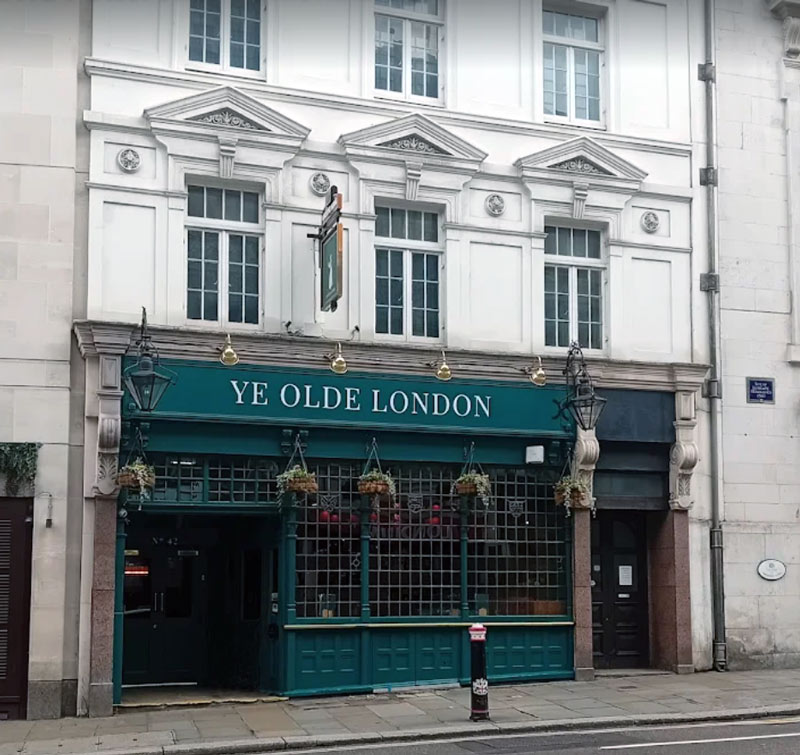
Ye Olde London
Ye Olde London, 42 Ludgate Hill, City of London, EC4M 7DE
Ye Olde London Today
Ye Olde London is today a Greene King pub, with a delightful traditional pub feel. The building itself dates from the later part of the 19th century. The décor is stylish and contemporary while keeping a relaxed atmosphere. The interesting large window frontage to Ludgate Hill gives a bright warm glow to the bar and seating area on the ground floor. Natural wood panelling adds to the historic past of the building in a subtle way.
The bar offers all you would expect from Greene King, including Abbot and IPA, along with a modern selection of lagers and stouts. The food menu offers burgers, pub classics such as beer battered fish & chips, sandwiches and Sunday roasts.
There is a delightful outdoor space at the rear of the pub, offering alfresco seating.
Ye Olde London Past
Following the demolition of the old Ludgate and the 1864 creation of Ludgate Circus, the separate designation for Ludgate Street was officially abolished, renaming the entire continuous route from Fleet Street to St Paul's as Ludgate Hill.
An advert in The North Middlesex Chronicle of 2nd April 1870 lists the Old London Coffee House at number 42 Ludgate Hill.
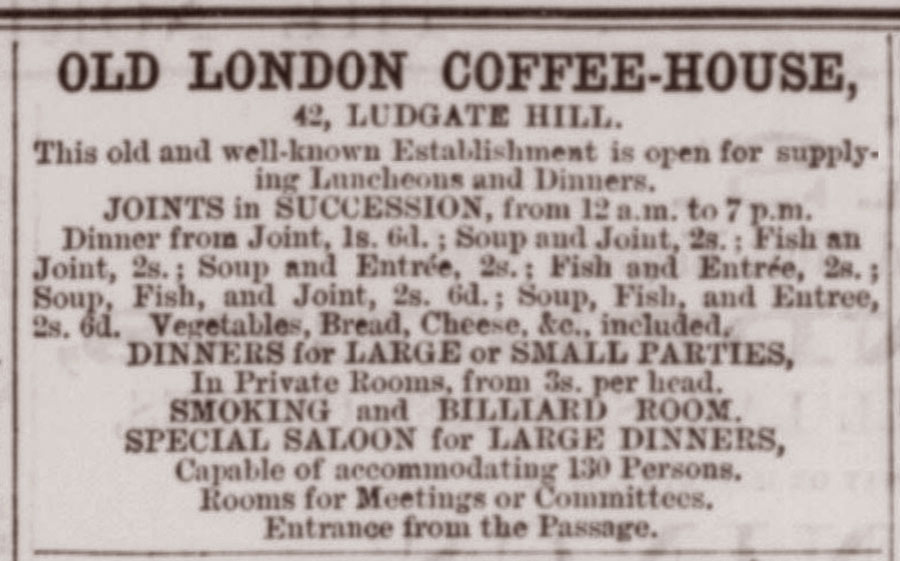
The “Post Office London Directory from 1882” names Number 42 Ludgate Hill as “London Coffee House".

42 Ludgate Hill was purchased for £29,000 in September 1890 as a fully licensed public house – the Old London Coffee House.
The name alters over the years, the Post Office London Trades and Professional Directory for 1914 has “Ye Old London Coffee House, 42 Ludgate Hill” and referenced as “Ye Olde London Tavern" in the 1970s.
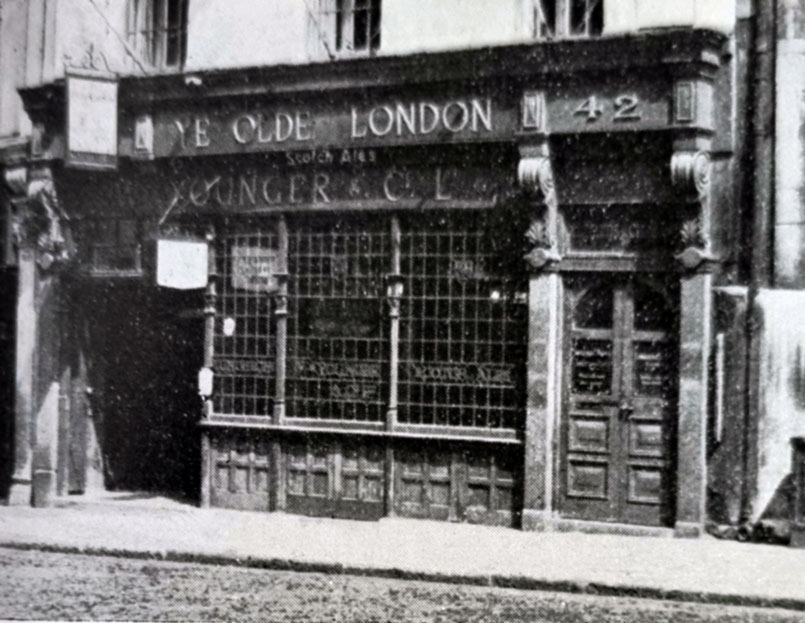
This image taken in the first part of the twentieth century looks remarkably similar to today.
Nearby Notables
Abutting Ye Olde London on the east wall is the church St Martin’s Ludgate ,built around 1680 after the Great Fire of London, commonly attributed to Christopher Wren, but I have read some doubt about this – read more on the London Inheritance site. The church foundations on the west wall are said to be built directly on the Roman City Wall, I have found nothing to confirm this.
According to the National Church's Trust : St Martin’s sustained the least damage of all City churches during World War II; a large central brass chandelier brought from St Vincent's Cathedral in the West Indies in 1777; woodwork includes the original reredos, communion table, communion rails and pulpit; bread shelves, on which wealthier worshippers would place bread for the poor of the parish to collect.
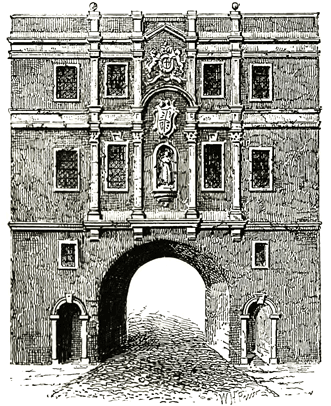
A Blue Plaque on St. Martin’s Church next door to Ye Olde London marks the location of Lud Gate, the westernmost gate in the historic London Wall. The Hill down to Fleet Street was the busiest in the City and Lud Gate was a major bottleneck and it was demolished in July 1760. The website “The History of London” has extended history of Lug Gate
The Romans built the wall with ragstone brought by barge from Kent as defence. Over 2 miles long, 6 metres tall and 2.5 metres thick encompassing the land-facing sides of Londinium, you can see some remains today in many City locations. None are a close walk from Ye Olde London, the City of London Official Guides has a self-guided walk if you are interested. .